
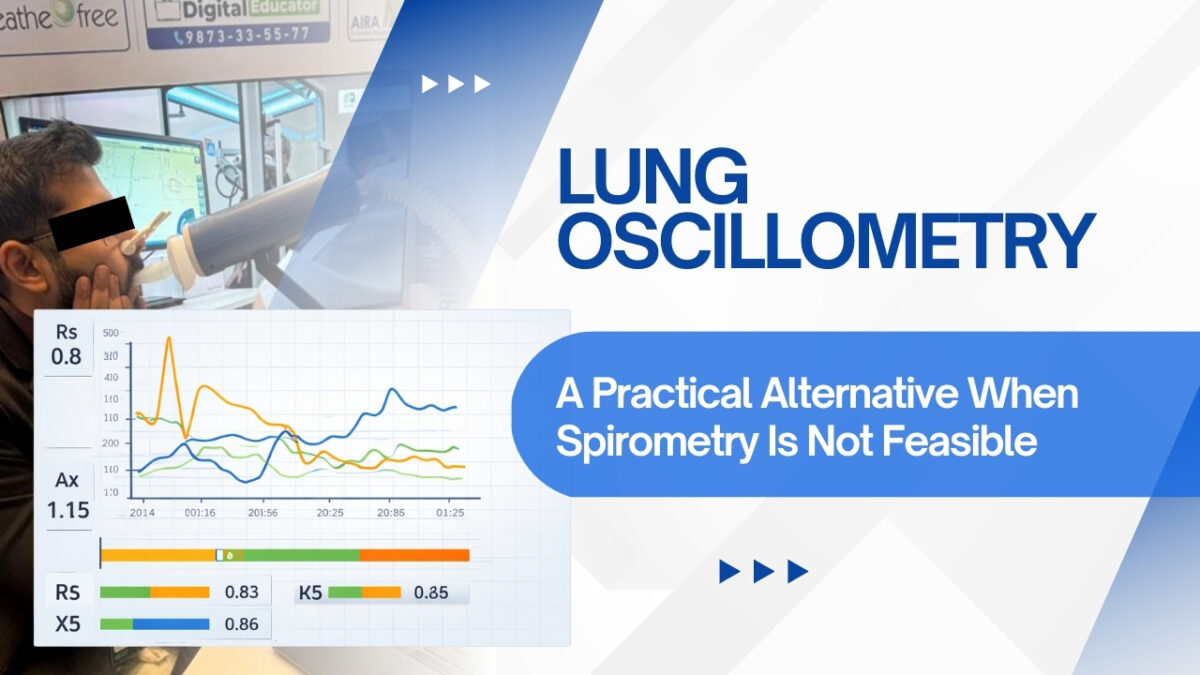
Spirometry remains the standard test for assessing lung function, but in routine clinical practice, many patients are unable to perform acceptable spirometry due to cough, breathlessness, or poor technique. In such situations, lung oscillometry using the forced oscillation technique (FOT) offers a practical and patient-friendly alternative.
Lung oscillometry requires only quiet tidal breathing and measures respiratory resistance and reactance, providing insights into both large and small airway mechanics. This makes it particularly useful in adults presenting with asthma symptoms where spirometry is difficult or not possible.
Recent clinical evidence shows that oscillometry parameters, especially reactance measures such as the area of reactance (Ax), are highly sensitive in identifying airway abnormalities. Resistance parameters help differentiate between large and small airway obstruction, while reactance parameters reflect changes in peripheral lung mechanics. Together, they provide a broader picture of airway function compared to spirometry alone.
Studies conducted using the Antlia Pro FOT device have demonstrated that oscillometry can reliably detect airway obstruction in symptomatic adults who cannot perform spirometry. These findings support the use of lung oscillometry as a valuable screening and assessment tool in outpatient settings, particularly where rapid, low-effort testing is needed.
As access to lung function testing expands beyond specialized labs, lung oscillometry interpretation using FOT devices such as Antlia Pro may help bridge important diagnostic gaps in everyday respiratory care.
Original Research Source
Balachandran J. Lung oscillometry: A practical solution for overcoming spirometry challenges. Journal of Advanced Lung Health. 2024.
DOI: https://doi.org/10.4103/jalh.jalh_29_24